Strong Enough for the Adventure: Preparing for Hiking After 55
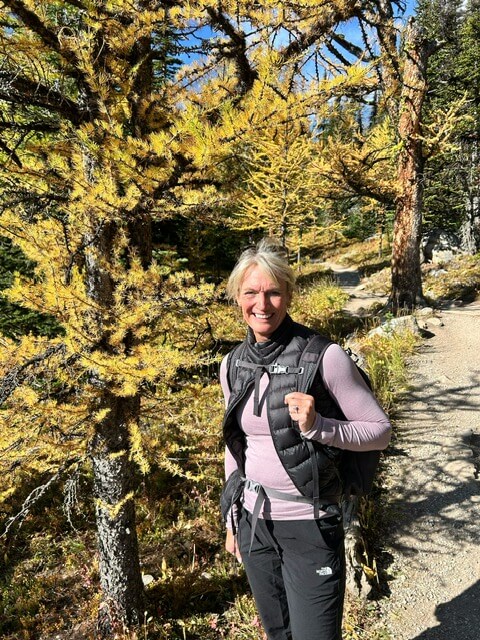
Some of the best reasons to stay strong have nothing to do with how we look. They're about what we want to experience.
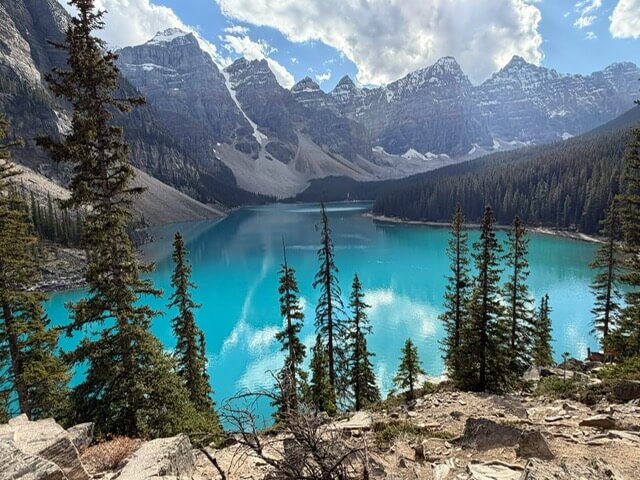
Hiking after 55 can be one of the most rewarding ways to put your strength to work. I recently spent a week hiking in Banff and Lake Louise with my husband, Bob, my brother, Bobby, and his girlfriend, Shelly. We hiked to Lake Agnes Teahouse and the Plain of Six Glaciers Teahouse. Another day took us through beautiful Larch Valley and up to Sentinel Pass.
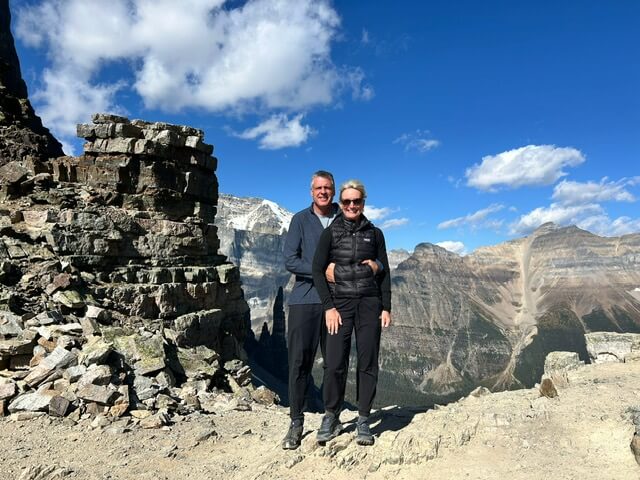
Paige and Bob on a high mountain trail in Larch Valley.
The scenery was spectacular. The climbs were challenging. And on a day that added up to around 30,000 steps, I was grateful for the strength and stamina that helped me enjoy the adventure.
At 60, I loved feeling capable of taking on that challenge. The elevation made me work, but the views were worth the sweat!
As a personal trainer, here's how I would help someone prepare for a trip like this.
Preparing for Hiking After 55: Give Yourself Time
Ideally, begin preparing eight to twelve weeks before your trip. If you're newer to exercise, give yourself more time and start with shorter, easier sessions.
My recommended foundation is three strength training sessions and two incline walking sessions each week, adjusted to your current fitness level.
The goal is to arrive feeling strong, confident, and ready to enjoy the trails.
Strength Train Three Times a Week
I would use full-body workouts with extra attention to the legs, hips, calves, and core. Schedule them on nonconsecutive days when possible.
These are some of my favorite exercises for hiking preparation:
- 1
Step-ups: Climbing a mountain means repeatedly lifting your body uphill. Start with a low, sturdy step, place your entire foot on it, and push through the working leg. Add dumbbells when you're ready.
- 2
Slow, controlled step-downs: Remember - you have to come back down! Practice lowering yourself slowly from a low step, using support as needed. This builds the control you'll use during descents.
- 3
Squats: Goblet squats, bodyweight squats, or chair squats build leg strength. Choose the version that lets you move comfortably with good form.
- 4
Reverse lunges or supported split squats: These strengthen each leg individually. Hold a stable support if needed and work within a comfortable range.
- 5
Glute bridges and calf raises: Give your hips and lower legs some attention. They'll be working throughout the hike.
- 6
Rows and planks: Your upper back and core help you manage your daypack and maintain your posture as the day gets longer.
For most exercises, I would start with two sets of eight to twelve repetitions and gradually progress. Distribute these movements across your three workouts rather than trying to do every exercise every session.
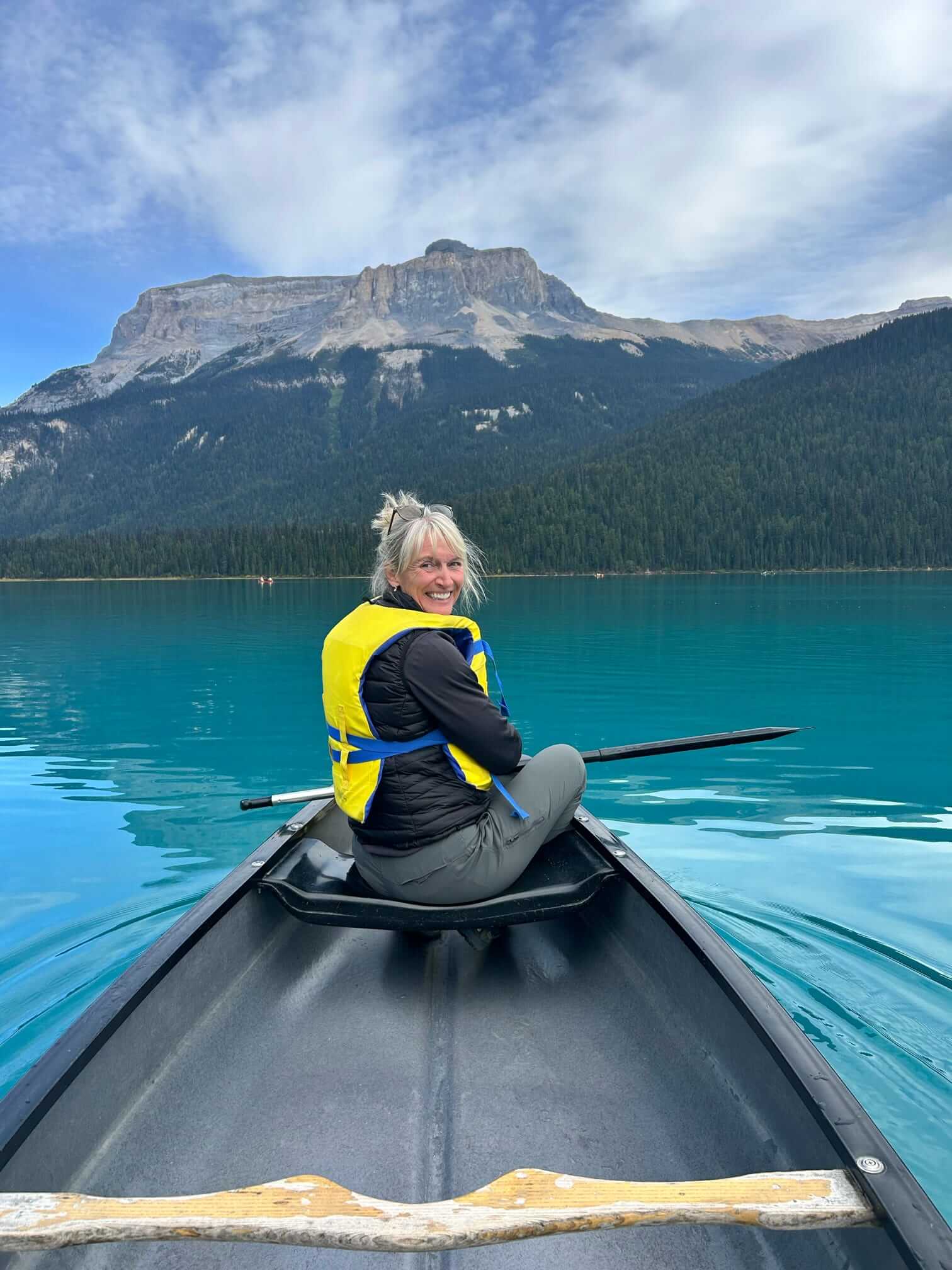
Paige canoeing on the lake in the morning, a welcome break between hikes.